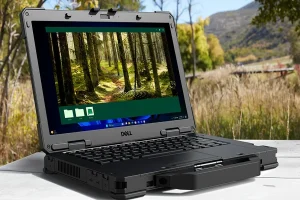
Field professionals in utilities, transportation, public safety, and industrial services operate in environments where traditional consumer laptops simply cannot survive. Exposure to vibration, dust, temperature shifts, and accidental drops makes durability a critical requirement. For many organizations, investing in a semi rugged laptop provides the ideal balance between resilience, performance, and cost efficiency without the added bulk of fully rugged systems.
Understanding where semi-rugged devices fit within the rugged computing spectrum is essential for IT managers and procurement teams seeking reliable hardware that supports real-world operational demands.
What Defines a Semi Rugged Laptop?
A semi rugged laptop is engineered to withstand moderate environmental stress while maintaining portability and computing power similar to high-performance business notebooks. These systems are specifically designed for professionals who transition between office settings and field locations.
Typical features include:
- Reinforced chassis construction
- Shock-mounted storage drives or solid-state storage
- Spill-resistant keyboards
- Improved thermal management
- Compliance with MIL-STD testing for vibration and limited drop resistance
Unlike fully rugged devices designed for extreme industrial or military applications, semi-rugged systems provide enhanced protection without excessive weight or unnecessary cost.
Practical Applications Across Industries
Semi rugged laptops are widely adopted in industries where reliability is crucial but complete environmental sealing is not required.
Utilities and Field Service
Technicians servicing electrical grids, telecommunications infrastructure, and water systems frequently work outdoors. Their devices must tolerate dust exposure, vehicle vibration, and occasional impact while maintaining consistent processing performance.
Transportation and Logistics
Fleet supervisors and warehouse managers rely on mobile computing solutions inside vehicles and distribution centers. Equipment must handle movement, changing temperatures, and operational demands without frequent hardware failure.
Public Safety and Municipal Operations
Emergency response units and municipal teams depend on dependable systems for reporting, dispatch coordination, and documentation. Semi rugged laptops provide durability suitable for vehicle-based deployment and temporary field operations.
Semi Rugged vs Fully Rugged: Making the Right Choice
Choosing the appropriate level of ruggedization requires evaluating real environmental exposure.
Fully rugged laptops typically offer:
- Sealed magnesium alloy frames
- Higher ingress protection ratings
- Wider operating temperature ranges
- Higher drop resistance
While these features are essential in mining, oil and gas, or combat environments, they may exceed the needs of most commercial field teams. For many organizations, semi rugged systems provide sufficient durability without the higher acquisition cost associated with fully rugged models.
Performance Without Compromise
Modern semi rugged laptops are built to deliver enterprise-grade performance. They often include:
- Current-generation processors
- High-brightness displays for outdoor visibility
- Extended battery life for full shifts
- Multiple connectivity ports for peripherals and docking
This ensures compatibility with GIS applications, diagnostics software, fleet management systems, and other mission-critical tools.
Long-Term Cost Efficiency
Hardware failure in the field results in downtime, repair expenses, and lost productivity. Consumer-grade laptops are not designed for repeated vibration or environmental exposure, which increases replacement frequency.
Investing in semi rugged hardware helps reduce:
- Device replacement cycles
- Field service interruptions
- IT maintenance costs
- Productivity disruptions
Over time, this contributes to a lower total cost of ownership compared to standard business laptops deployed in demanding environments.
Integration and IT Deployment
Semi rugged systems integrate smoothly into enterprise IT ecosystems. They support standard operating systems, remote management platforms, and advanced security protocols.
Additional capabilities often include:
- Vehicle docking compatibility
- Optional GPS integration
- Smart card or biometric authentication
- Reliable wireless connectivity
These features make semi rugged laptops particularly valuable in regulated industries requiring secure and dependable mobile computing.
Partnering with the Right Provider
Selecting the correct device specification is only part of the equation. Organizations benefit from working with experienced rugged computing specialists who understand operational requirements and long-term deployment considerations.
Important evaluation factors include:
- Environmental conditions
- Software compatibility
- Mobility needs
- Scalability
- Warranty and lifecycle support
For organizations seeking expert guidance and specialized rugged hardware solutions, Rugged Computing, Inc provides professional support and a range of durable computing options tailored to field-based industries.
Final Thoughts
Technology deployed in the field must withstand more than standard office conditions. While fully rugged systems serve extreme-use environments, many organizations achieve the optimal balance of durability and performance with a semi rugged laptop.
By aligning device resilience with operational realities, businesses can enhance productivity, reduce downtime, and ensure consistent performance in challenging environments.
Investing in the right rugged computing solution today supports operational reliability and long-term efficiency tomorrow.